
Standard homeowners insurance policies don’t cover flood losses, so flood insurance is typically required for loans when a property is located in a federally designated flood zone.
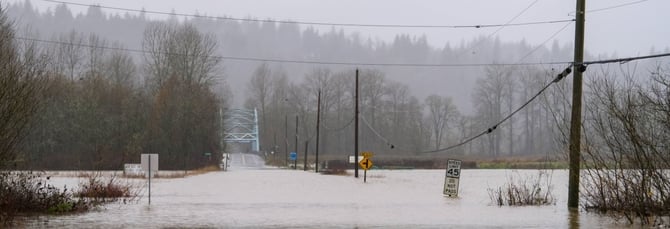
If your property is in a 'Special Flood Hazard Area' (SFHA) as determined by the Federal Emergency Management Agency (FEMA), we will likely require you to maintain a flood insurance policy throughout the term of your loan. Flood insurance is designed to provide financial protection if flooding occurs. Giving you some resources to repair or restore your home—a key concern for both you and us.
Life of Loan Flood Tracking
Life-of-loan flood tracking is a service that continuously tracks a property’s FEMA flood zone status for the entire term of a loan and alerts us if that status changes. It is layered on top of the initial flood zone determination to keep flood insurance compliance current over time rather than only at origination.
Before you close your loan, we perform an initial flood zone determination to determine if your property is in a flood zone.
If the flood maps change during the term of the loan and your home becomes newly designated in an SFHA, we will notify you—and you may be required to purchase flood insurance at that point.
This ongoing monitoring is called 'life of loan flood tracking,' and it continues until your loan is paid off.
Who Governs Flood Zones?
Flood zones are primarily designated and mapped in the United States by the Federal Emergency Management Agency (FEMA) with day to day management handled by state and local governments that participate in the National Flood Insurance Program (NFIP).
FEMA creates and updates Flood Insurance Rate Maps (FIRMs), which determine flood hazard zones and special flood hazard areas. Those mapped zones drive flood insurance requirements, premiums and minimum federal floodplain management standards. Local floodplain administrators, planning departments, and recorders maintain parcel-level flood zone information and advise property owners.
We must use these maps to assess insurance requirements and regulatory compliance.How Flood Zones Change
Flood zones change over time when FEMA updates its flood maps to reflect the new data.
Why do zones change? Flood zones evolve due to factors like land and use development, changes in drainage systems, new engineering studies, climate events, and a myriad of other factors .
How do updates happen? FEMA periodically studies communities, reviews floodplain data, and works with local officials, engineers, and the public, before releasing updated Flood Insurance Rate Maps (FIRMs).
Impact on borrowers: If your property moves into a designated flood zone after a map update, we will notify you of any new flood insurance requirement as a condition of your loan. Conversely, if your property is removed from a flood zone, you may no longer be required to keep flood insurance as a condition of your loan (although you may choose to maintain flood insurance coverage).
Key Takeaways
- Flood insurance is required for loans on properties in designated flood zones.
- We monitor the flood zone status for the entire life of the loan ('life of loan flood tracking').
- FEMA governs the designation and revision of flood zones.
- Flood zones often change over time due to updates in mapping and environmental factors. Always respond immediately to any notifications from us regarding changes in flood insurance requirements to ensure full compliance with the terms of your loan and protection of your property.
Information is provided for explanation purposes only. Analysis is determined by your unique situation. If you’re unsure whether you need flood insurance, please contact us via email at insurance@automhatic.com or call (888) 226-8929.
Want to know more? Check out FEMA's website.